You've had more good days than you remember.
Capture a good moment in seconds. It comes back to you weeks, months and years later, when you've forgotten it.
Capture your first momentFree. No ads. No data selling.

An independent project by a komoot co-founder. Free, no ads, built on positive psychology research.
Two steps are yours.
LifeSparks does the third.
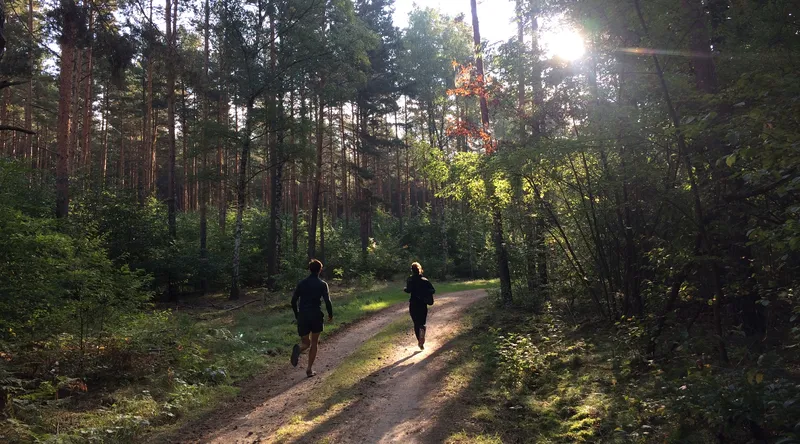
1 · Notice something good
A trip, a dinner, an ordinary evening that turned out well. Anything you'd want to come back to.

2 · Hold on to it
However the moment is best held — a photo, a video, a few spoken words, a line of text. No prompts to answer, no form to fill in. One saved moment is one Spark.
3 · It finds you again, years later
Every few days, a Spark comes back — by push or by email. Something you haven't thought about in a long time, at a moment you weren't expecting it.
Every three days by default, or as often as you like. Nothing repeats within a month.

Miss a week, miss a month — nothing breaks. There's no streak to lose.
Free. No ads.
Why this works
1 · The bias is real, and it's not a character flaw
Across a large body of research, negative information is processed more thoroughly and remembered more easily than positive information. This holds across cultures and ages.
2 · Good memories don't fade. They just stop coming up.
A good afternoon three years ago is still in your memory. Nothing in your day is going to bring it up.
3 · Recall is the part that does the work
The research on positive memory isn't about writing things down. It's about going back to them. Reliving a good moment reproduces a meaningful part of the original effect — which is why a journal you never reopen changes very little.
The first one comes back within days.
The first Spark is a small surprise. A photo you'd have never gone looking for, in the middle of an ordinary Tuesday.
After a few months, something else happens. You start to see the pattern of your own good moments — how many there were, how ordinary most of them looked at the time, how little any of them had to do with the things you were worrying about that week.
It's not a rosier picture. It's a fairer one, and a fairer one turns out to be better.
Your life doesn't change. Your account of it does.
Free. No ads.

The elder branch started to sprout.
Recorded this on the walk home. Good day.

28th birthday. I don't remember this part.
Deichkind. Still not fully recovered.
Lorem ipsum dolor sit amet, consectetur adipiscing elit, sed do eiusmod tempor incididunt ut labore. Magna aliqua enim ad minim veniam, quis nostrud exercitation ullamco laboris. Nisi ut aliquip ex ea commodo consequat.
Your phone already shows you memories. This is not that.
Your camera roll isn't a selection.
It holds everything — screenshots, receipts, the bad days, the good ones, all mixed together. Nothing in it knows which moments mattered to you. Only you know that, and it takes a second to say so.
An album only works if you open it.
Journals, photo books, folders of favourites — all of them need you to remember, and to be in the mood. That's the part that doesn't happen.
LifeSparks needs both halves.
You choose the moment. It comes back on its own. Everything else has one or the other.
Why it's free, and what that means for your data
I'm not building a business here. There's no funding to return, no growth target, no exit. LifeSparks is a personal project that I pay for myself.
That's not generosity — it's the reason the rest of this is possible. Nobody needs to be monetised, so nothing about your moments has to be useful to anyone but you.
No ads. Not now, not ever. That's the wrong way to pay for something like this, and it's the one thing I won't do.
If you sign up now, LifeSparks stays free for you, with 10 GB of storage. Photos and videos cost real money to store, and if this ever grows beyond what I can pay for myself, new accounts may cost something. Yours won't.
Your Sparks are never sold, never analysed for advertising, and never used to train AI models.
You can export everything, any time, in a format you can actually read.
Delete your account and your data is gone. Not archived, not anonymised — deleted.
Your data is stored in the EU and covered by GDPR. The full details are in the privacy policy, which is written to be read.
Who's behind this

I'm Christoph. I grew up in Mittelberg, a village in Austria, studied physics in Munich, and co-founded komoot, which we sold in 2025. After a break, I found I still love building things — and this is a project I'm glad to be working on.
The idea isn't mine. A friend of mine writes down the good things that happen to her over the year, drops the notes in a shoebox, and reads them at the end of December. That's the whole concept. I picked it up about eighteen years ago and never quite let go of it — I kept working out, on and off, what a modern version of the shoebox would look like.
LifeSparks is that version. I'm building it on my own, and I'm not trying to build a company this time — which means I can take the time to do it properly.
If something here resonates, I'd be glad to hear about it.
Yours, Christoph
Questions
Is this just positive thinking?
No. LifeSparks doesn't ask you to reframe anything, look on the bright side, or pretend the hard parts didn't happen. It only holds on to the good moments you chose yourself, and gives them back later.
Can anyone else see my Sparks?
No. There's no sharing, no feed, no friends, no public profiles. Nobody sees your Sparks but you.
Where can I use it?
Right now LifeSparks runs in the browser, on any device. Apps for iOS and Android are coming at the end of the year.
What if you stop working on it?
I don't plan to — this is a long-term project for me. And if it ever came to that, you'd get at least 90 days' notice by email, and you could export everything throughout.
One good moment is enough to start.
Email and a password. No card, nothing to install, and you can capture your first Spark in the same minute.
Capture your first SparkFree. No ads. Export or delete everything, any time.